Bjørnen angriper
Så hva skal du gjøre? Vel, i følge Støen, er det bare en strategi som gjelder for mennesket: Å trekke seg rolig tilbake. Skulle bjørnen, mot all formodning, gå til angrep skal du kaste fra deg en gjenstand og fortsatt trekke deg tilbake. Ofte vil bjørnen komme med et skinnangrep, noe som gir deg en ekstra mulighet til retrett.
via nrk.no
Hva gjør en når bjørnen angriper? NRK gir deg svaret. De har også en video der Støen forteller deg mer: http://www1.nrk.no/nett-tv/klipp/426675. Kort oppsumert, ikke spring.
Hvordan klippe hekken
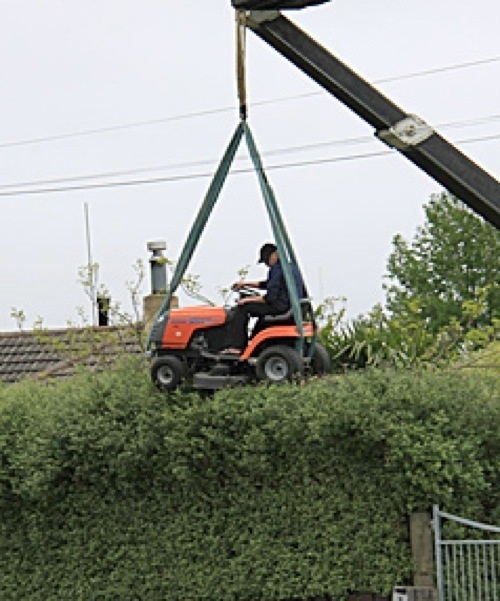
via gizmodo.com
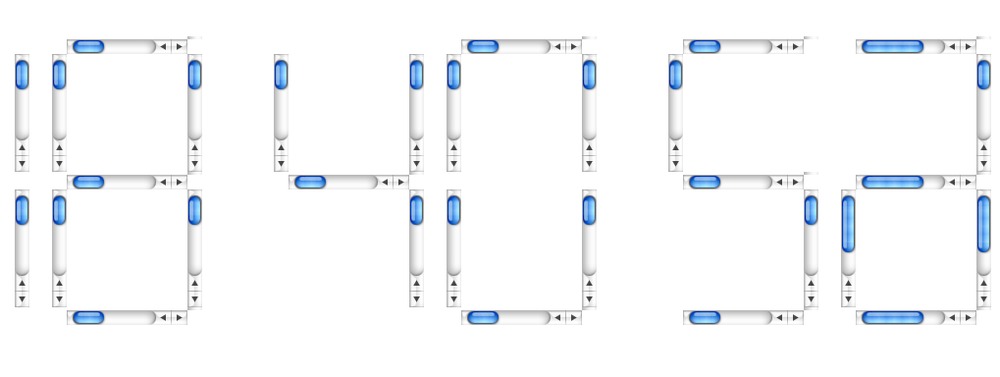
Scroll (bar) clock
Svineinfluesavaksinen
Er du i stuss på om den er trygg, eller trenger du argumenter mot
skeptikerene? Her er en saklig og god gjennomgang av vaksinen:
http://10min.no/samfunn/er-det-farlig-a-ta-svineinfluensavaksinen
Mamihlapinatapai
Mamihlapinatapai (sometimes spelled mamihlapinatapei) is a word from the Yaghan language of Tierra del Fuego, listed in The Guinness Book of World Records as the “most succinct word”, and is considered one of the hardest words to translate. It describes “a look shared by two people with each wishing that the other will initiate something that both desire but which neither one wants to start.”
via en.wikipedia.org
Mediocrity
Mediocrity knows nothing higher than itself, but talent instantly recognizes genius
Sir Arthur Conan Doyle
Bank Notes: a collection of Bank Robbery Notes
<banknotes365.com>
I have a gun in my bag.
Give me $5,000 please.
Thanks a bunch.
via e24.no.
Overraskende mye “Thanks”, faktisk.
Taumatawhakatangihangakoauauotamateaturipukakapikimaungahoronukupokaiwhenuakitanatahu
Taumatawhakatangihangakoauauotamateaturipukakapikimaungahoronukupokaiwhenuakitanatahu is the Māori name for a hill, 305 metres (1,000 ft) high, close to Porangahau, south of Waipukurau in southern Hawke’s Bay, New Zealand. The name is often shortened to Taumata by the locals for ease of conversation. The New Zealand Geographic Placenames Database, maintained by Land Information New Zealand, records the name as “Taumatawhakatangihangakoauauotamateapokaiwhenuakitanatahu”, a hill at 40.3480 S, 176.5321 E.[1] It has gained a measure of fame as it is the longest place-name found in any English-speaking country
via en.wikipedia.org
An Epidemic of Fear: How Panicked Parents Skipping Shots Endangers Us All
Before smallpox was eradicated with a vaccine, it killed an estimated 500 million people. And just 60 years ago, polio paralyzed 16,000 Americans every year, while rubella caused birth defects and mental retardation in as many as 20,000 newborns. Measles infected 4 million children, killing 3,000 annually, and a bacterium called Haemophilus influenzae type b caused Hib meningitis in more than 15,000 children, leaving many with permanent brain damage. Infant mortality and abbreviated life spans – now regarded as a third world problem – were a first world reality.
Today, because the looming risk of childhood death is out of sight, it is also largely out of mind, leading a growing number of Americans to worry about what is in fact a much lesser risk: the ill effects of vaccines. If your newborn gets pertussis, for example, there is a 1 percent chance that the baby will die of pulmonary hypertension or other complications. The risk of dying from the pertussis vaccine, by contrast, is practically nonexistent – in fact, no study has linked DTaP (the three-in-one immunization that protects against diphtheria, tetanus, and pertussis) to death in children. Nobody in the pro-vaccine camp asserts that vaccines are risk-free, but the risks are minute in comparison to the alternative.
Still, despite peer-reviewed evidence, many parents ignore the math and agonize about whether to vaccinate. Why? For starters, the human brain has a natural tendency to pattern-match – to ignore the old dictum “correlation does not imply causation” and stubbornly persist in associating proximate phenomena. If two things coexist, the brain often tells us, they must be related. Some parents of autistic children noticed that their child’s condition began to appear shortly after a vaccination. The conclusion: “The vaccine must have caused the autism.” Sounds reasonable, even though, as many scientists have noted, it has long been known that autism and other neurological impairments often become evident at or around the age of 18 to 24 months, which just happens to be the same time children receive multiple vaccinations. Correlation, perhaps. But not causation, as studies have shown.
via wired.com
Lang, god og viktig artikkel i Wired om vaksinering og motstand mot vaksinering. Les den!