Svineinfluesavaksinen
Er du i stuss på om den er trygg, eller trenger du argumenter mot
skeptikerene? Her er en saklig og god gjennomgang av vaksinen:
http://10min.no/samfunn/er-det-farlig-a-ta-svineinfluensavaksinen
Bjarteblogg Ymse
Er du i stuss på om den er trygg, eller trenger du argumenter mot
skeptikerene? Her er en saklig og god gjennomgang av vaksinen:
http://10min.no/samfunn/er-det-farlig-a-ta-svineinfluensavaksinen
Mamihlapinatapai (sometimes spelled mamihlapinatapei) is a word from the Yaghan language of Tierra del Fuego, listed in The Guinness Book of World Records as the “most succinct word”, and is considered one of the hardest words to translate. It describes “a look shared by two people with each wishing that the other will initiate something that both desire but which neither one wants to start.”
via en.wikipedia.org
Mediocrity knows nothing higher than itself, but talent instantly recognizes genius
Sir Arthur Conan Doyle
<banknotes365.com>
I have a gun in my bag.
Give me $5,000 please.
Thanks a bunch.
via e24.no.
Overraskende mye “Thanks”, faktisk.
Taumatawhakatangihangakoauauotamateaturipukakapikimaungahoronukupokaiwhenuakitanatahu is the Māori name for a hill, 305 metres (1,000 ft) high, close to Porangahau, south of Waipukurau in southern Hawke’s Bay, New Zealand. The name is often shortened to Taumata by the locals for ease of conversation. The New Zealand Geographic Placenames Database, maintained by Land Information New Zealand, records the name as “Taumatawhakatangihangakoauauotamateapokaiwhenuakitanatahu”, a hill at 40.3480 S, 176.5321 E.[1] It has gained a measure of fame as it is the longest place-name found in any English-speaking country
via en.wikipedia.org
Before smallpox was eradicated with a vaccine, it killed an estimated 500 million people. And just 60 years ago, polio paralyzed 16,000 Americans every year, while rubella caused birth defects and mental retardation in as many as 20,000 newborns. Measles infected 4 million children, killing 3,000 annually, and a bacterium called Haemophilus influenzae type b caused Hib meningitis in more than 15,000 children, leaving many with permanent brain damage. Infant mortality and abbreviated life spans – now regarded as a third world problem – were a first world reality.
Today, because the looming risk of childhood death is out of sight, it is also largely out of mind, leading a growing number of Americans to worry about what is in fact a much lesser risk: the ill effects of vaccines. If your newborn gets pertussis, for example, there is a 1 percent chance that the baby will die of pulmonary hypertension or other complications. The risk of dying from the pertussis vaccine, by contrast, is practically nonexistent – in fact, no study has linked DTaP (the three-in-one immunization that protects against diphtheria, tetanus, and pertussis) to death in children. Nobody in the pro-vaccine camp asserts that vaccines are risk-free, but the risks are minute in comparison to the alternative.
Still, despite peer-reviewed evidence, many parents ignore the math and agonize about whether to vaccinate. Why? For starters, the human brain has a natural tendency to pattern-match – to ignore the old dictum “correlation does not imply causation” and stubbornly persist in associating proximate phenomena. If two things coexist, the brain often tells us, they must be related. Some parents of autistic children noticed that their child’s condition began to appear shortly after a vaccination. The conclusion: “The vaccine must have caused the autism.” Sounds reasonable, even though, as many scientists have noted, it has long been known that autism and other neurological impairments often become evident at or around the age of 18 to 24 months, which just happens to be the same time children receive multiple vaccinations. Correlation, perhaps. But not causation, as studies have shown.
via wired.com
Lang, god og viktig artikkel i Wired om vaksinering og motstand mot vaksinering. Les den!
via boingboing.net
Litt snop for musikknerdene blant oss.
via lifehacker.com
Takuo Toda satt verdensrekord med en modifisert versjon av dette designet 11 april med 27,9 sekunder i luften.
via kottke.org
Kanskje mest for de litt ekstra nysgjerrige. Hopp gjerne over de to første minuttene,
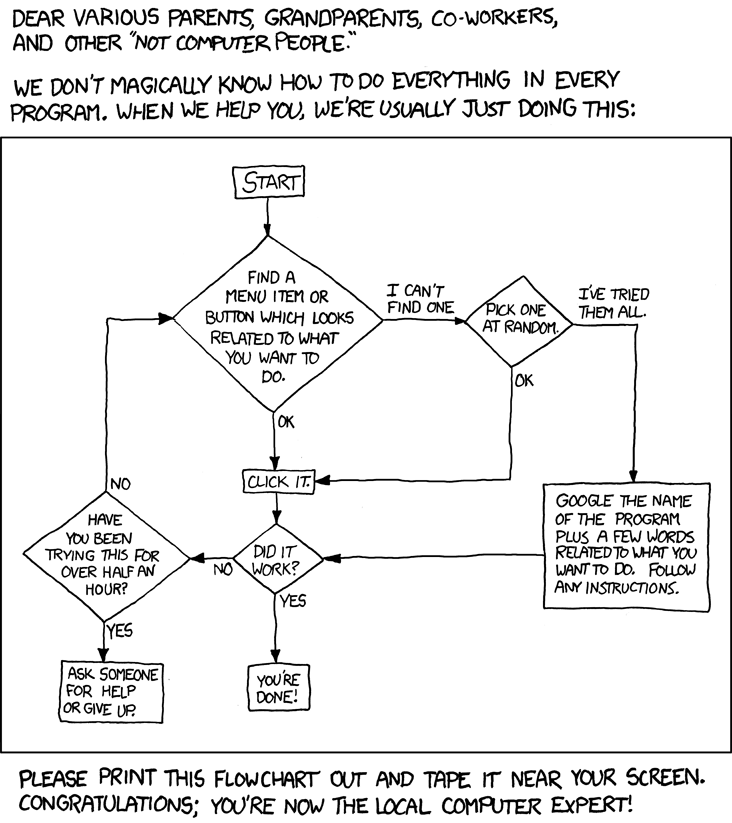
via xkcd.com
Automatisk oversettelse kan brukes til mye kjekt. Du kan for eksempel bruke Google Translate til a oversette noe til et annet sprak, og sa oversette det tilbake igjen og se hvor mye det har forandret seg. Noen som har tatt dette et par hakk lengre er translationparty.com. De oversetter frem og tilbake mellom engelsk og japansk helt til de finner likevekt, til det ikke forandrer seg lenger. Malet er a finne en setning som blir oversatt frem og tilbake flest mulig ganger før det blir likevekt. Ta en titt pa denne (som jeg er godt fornøyd med) for et fint eksempel:
http://translationparty.com/#1555795
Link til den beste du klarer i kommentarene.
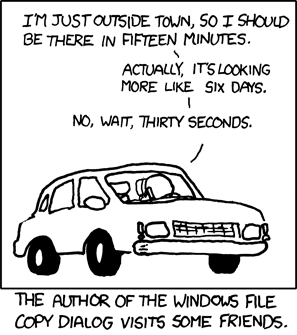
via xkcd.com