RIP - Du kan få kjøpt t-skjorte på nettsiden hans.
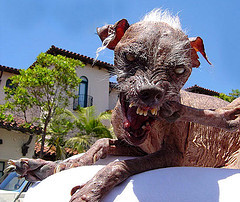
SAM Aka SAMACLAWSSAM is the three time, undefeated champ of the “World’s Ugliest Dog” contest (2003, 2004, 2005).
News traveled very quickly, and Susie received emails from around the world expressing condolences, and many expressing how SAM had affected their lives. There has truly been an outpouring of love. SAM touched people in very different ways, from eliciting almost uncontrollabe laughter to being a little frightened, but mostly it was SAM’s and Susie’s relationship that enormored them to so many. There can be love, affection and respect for even the seemingly unattractive souls of this world. There have been emails telling Susie that more and more animals that had been considered unadoptable in the past are now being taken in and loved by new parents. Although SAM will be missed by millions, he surely did his good deed while on this earth! People have also indicated that they really want SAM’s website and blog site to continue. As long as there are more pictures, stories, and inspiration to pass on, Susie will try and continue. Susie passes on her deepest thanks for all of the support she has received from so many thousands of you. Sam - “World’s Ugliest Dog” Rest In Peace
Sam is a purebred, yes that’s right, a purebred Chinese Crested Hairless. He’s almost 15 years old and was taken in as a rescue over five years ago by Susie Lockheed. He was considered “un-adoptable” by local shelters. Susie took him in on a 48-hour trial period. During that time he lived in a cage because he acted like “Cujo” the rabid dog. Susie had to shove food and water into the cage and run. The 48-hour trial became several days, and then Sam just walked out of the cage and became one of the pack (other hairless dogs who found harbor in Susie’s domain).
Sam World’s Ugliest Dog