A Solution To The Grandfather Paradox
/via The Browser
/via The Browser
The Economist:
For obvious reasons, surgeons do not like opening heads up unless it is strictly necessary. Sometimes, therefore, the battery packs that power head implants are put in the wearer’s chest. But this means running a wire up through the patient’s neck, from the one to the other, which is scarcely satisfactory either. A way to power such implants without replacing their batteries at all would thus be welcome. And Hyuck Choo of the California Institute of Technology and his colleagues think they have one. They plan to scavenge the necessary energy from the vibrations of the vocal cords that occur when someone is talking
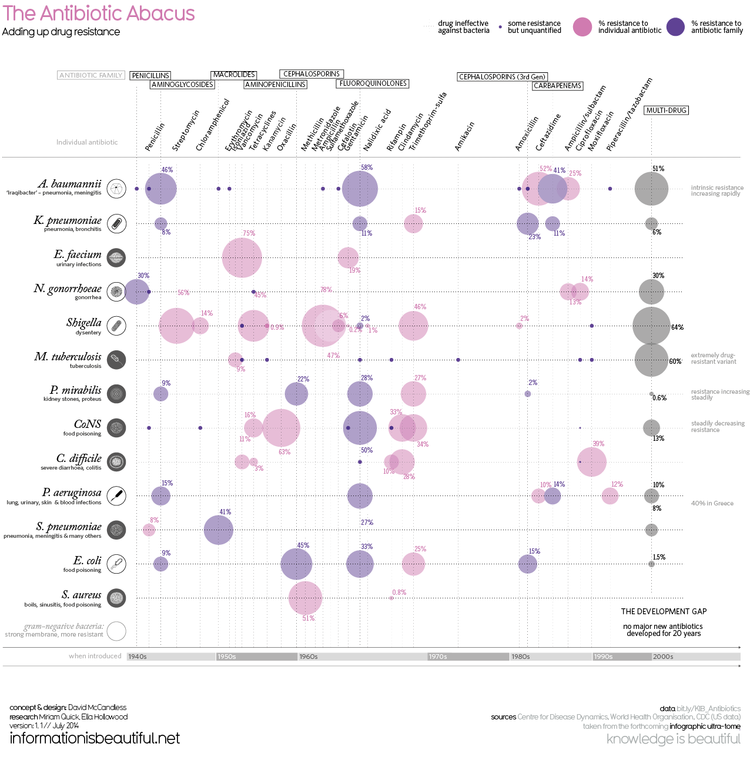
Oversikt over kor langt antibiotikaresistensen har kome, frå Information is Beautifull.
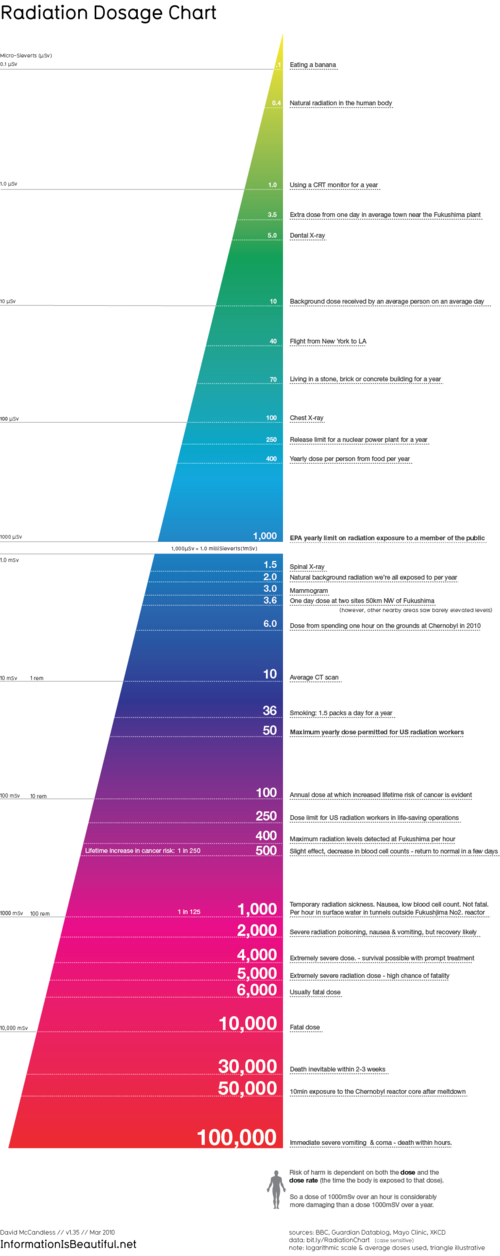
In 10 days here a person would be exposed to as much background radiation as a typical resident of the United States receives from all sources in a year.
… evidence of radiation’s toll: higher frequencies of tumors and physical abnormalities like deformed beaks among birds compared with those from uncontaminated areas, for example, and a decline in the populations of insects and spiders with increasing radiation intensity.
Some bird species, they reported in the journal Functional Ecology, appear to have adapted to the radioactive environment by producing higher levels of protective antioxidants, with correspondingly less genetic damage. For these birds, Dr. Mousseau said, chronic exposure to radiation appears to be a kind of “unnatural selection” driving evolutionary change.
/via NRK
http://www.nytimes.com/2014/04/04/science/space/a-moon-of-saturn-has-a-sea-scientists-say.html
Cassini has no instruments that can directly detect water beneath the surface, but three flybys in the years 2010-12 were devoted to producing a map of the gravity field, noting where the pull was stronger or weaker. During the flybys, lasting just a few minutes, radio telescopes that are part of NASA’s Deep Space Network broadcast a signal to the spacecraft, which echoed it back to Earth. As the pull of Enceladus’s gravity sped and then slowed the spacecraft, the frequency of the radio signal shifted, just as the pitch of a train whistle rises and falls as it passes by a listener.
Using atomic clocks on Earth, the scientists measured the radio frequency with enough precision that they could discern changes in the velocity of Cassini, hundreds of millions of miles away, as minuscule as 14 inches an hour.
Vitskapen leverer.
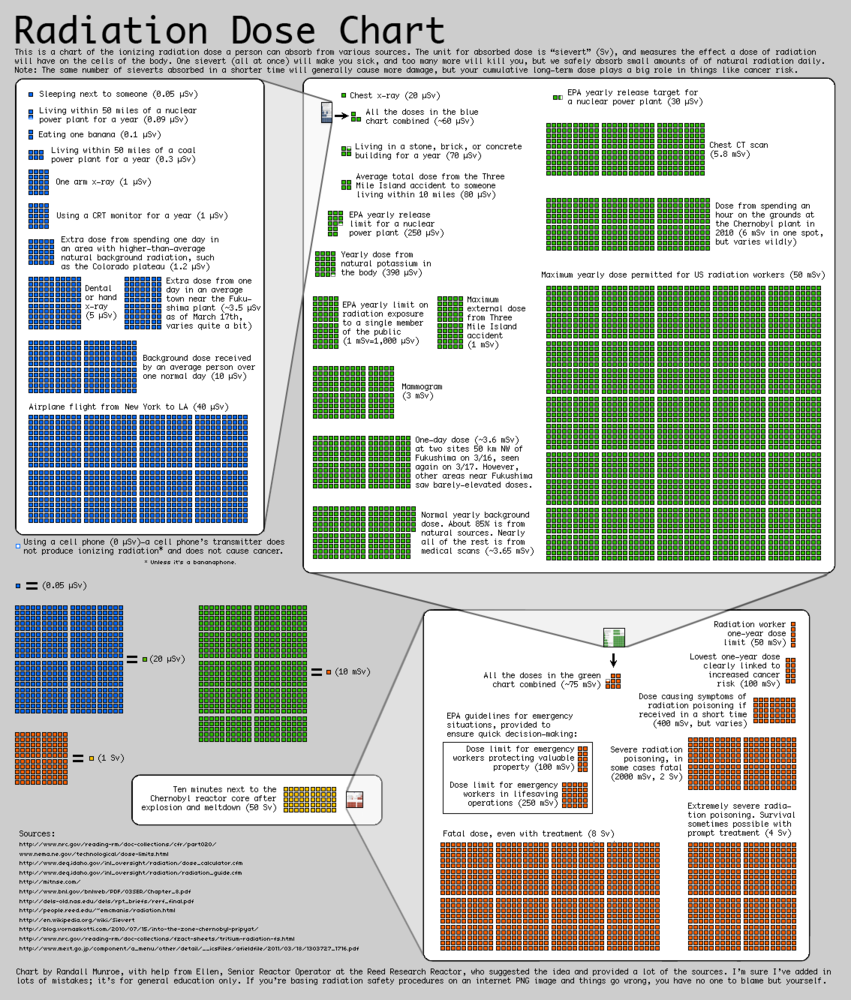
via xkcd.com
The Guardian har laget en fin oversikt:
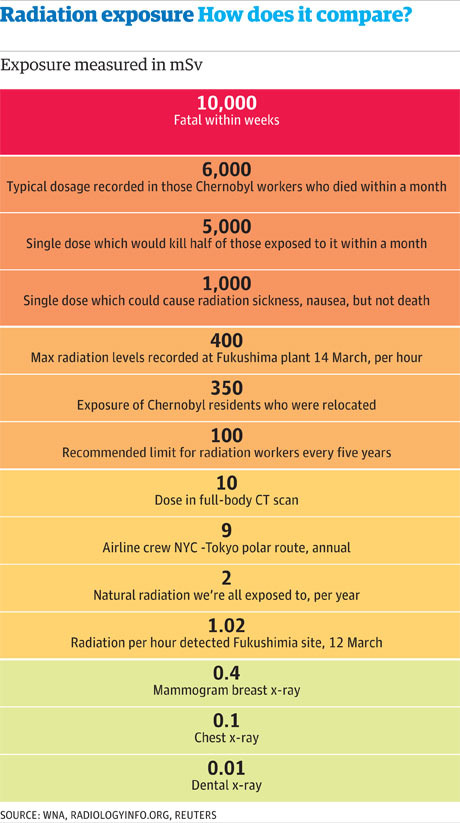
via guardian.co.uk